Loving Comics in Neil the Horse

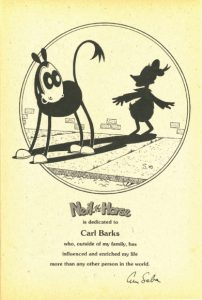
New article by Maaheen Ahmed, in the Comicalités issue “Histoire et influence des pratiques bédéphiliques” edited by Jean-Paul Gabilliet and Nicolas Labarre, about Neil the Horse.

Abstract: This article examines the love of comics or bedephilia discernible in Katherine Collins’s Neil the Horse Comics and Stories, a short-lived comic from the 1980s. It interrogates and contextualizes the “childish” elements of the comic, its bridging of children’s culture and adult culture through focusing girls’ comics and funny animal comics. It also discusses the comic’s interactions with musicals. Situating the comic in the “maturing” scene of 1980s North America, this article shows how Neil the Horse expresses a love for comics that were often left out of the mainstream and its alternatives; it reached out to a relatively mixed audience and an all but forgotten group of comics readers that often steered clear of the abundance of superhero comics.


Reading children in comics

New article by Maaheen Ahmed published in the trend-setting journal Children’s Geographies, articulating a sociohistorical mapping of children in comics:

“This article seeks to map a social history through examining children and ‘childish’ or child-like drawing styles, and hence the presence of children, in comics. Traced across different print formats, this history reflects the changing readership of different kinds of comics, ranging from the mixed, primarily adult readership of newspaper comics, the young readers of comics albums and magazines, and the mature readers of contemporary book-length comics or graphic novels. Unfolding through a changing matrix of affects incarnated by comics children, this social history shows how different kinds of power relationships between adults and children are articulated in the comics discussed. The carnivalesque liberty and laughter of early newspaper comics contrasts with the nostalgic gaze towards childhood imbuing many graphic novels that cater to a mature readership. Unfolding across a select corpus of key comics formats, this sociohistorical reading of comics children is channeled through affects and power struggles.”

Kids’ comics in the 1970s: Nicole Claveloux’s insufferable characters

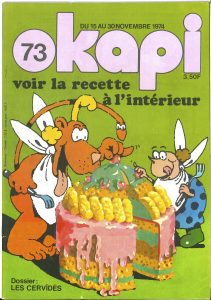
New outreach article on 9e kunst by Benoît Crucifix about the French illustrator and cartoonist Nicole Claveloux’s comics in the children’s magazine Okapi in the 1970s. The article considers the interplay between comics and picture books, and the playful self-reflexivity organized in Claveloux’s serial comic strips.

This research is based on previous work presented at the Drawing Gender: Women and French-language Comics symposium in February 2020 at the Billy Ireland Cartoon Library & Museum (Columbus, OH).

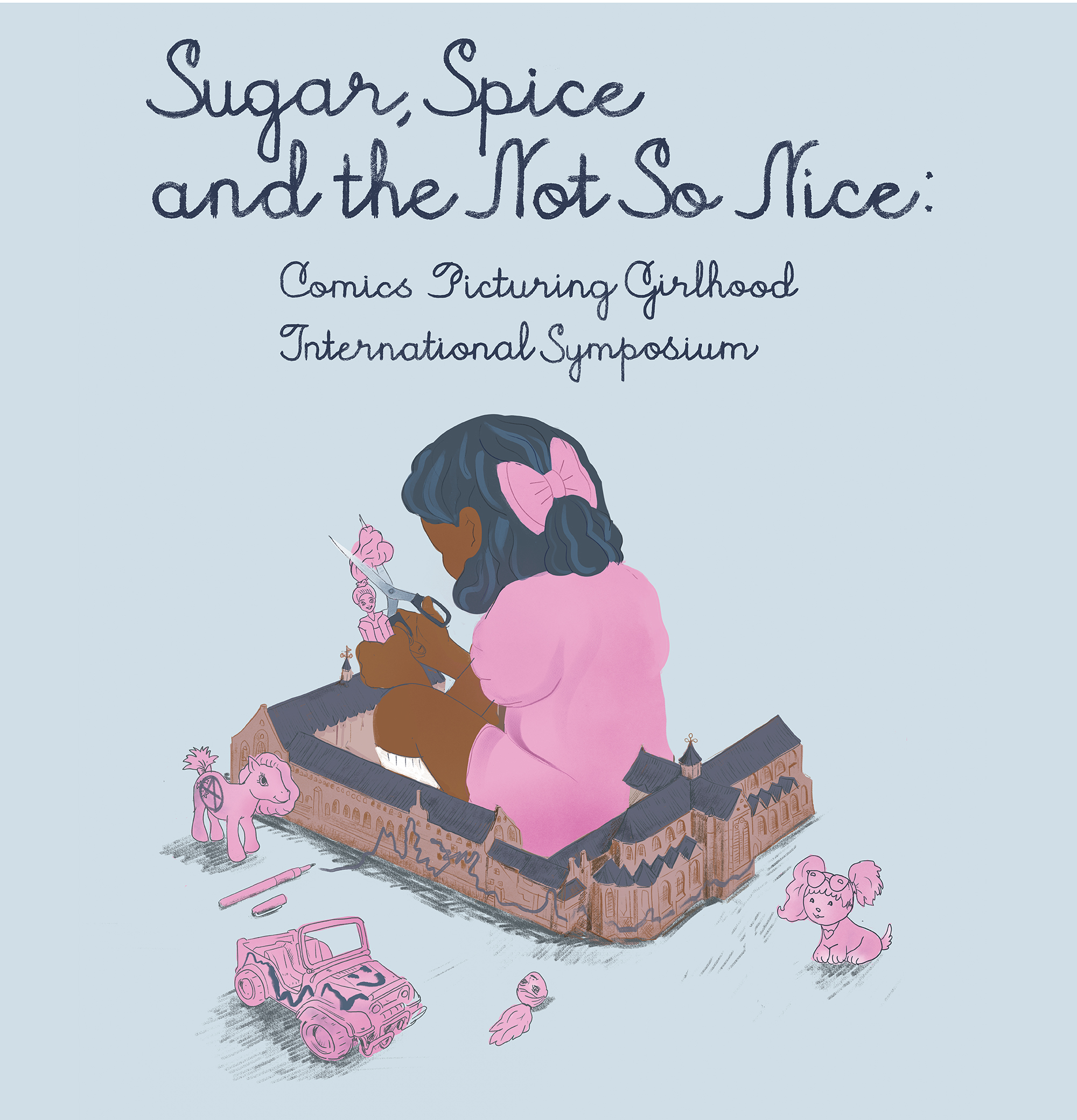
Comics Picturing Girlhood Symposium

Comics have long relied on reinforcing reader identity formation whether through interest, age group or hobbies. Constructed and largely mythical notions of gendered readership consequently became key aspects of many of these comics. As gendered products, comics have constructed feminine role models and identities to which girls have replied with both rebellion and conformity. The aim of this symposium is to inspire and promote discourse around comparative constructions of girlhood. This exploration will consider relationships between and influences on European girls’ comics in the twentieth and twenty-first centuries.

Due to the pandemic of covid-19, this conference will take place online. To attend the talks, register here.

Programme

Download the full programme in PDF.

If you wish to read the abstracts and want to get to know our participants better, download the AbstractBook.


Thursday 22 April

11 – 12:30 Welcome – Dona Pursall & Eva Van de Wiele (Ghent University)
Keynote – Mel Gibson (Northumbria University Newcastle)
Professional Identity, Girlhood Comics, Affection, Nostalgia and Embarrassment + Q&ALearn about her publications and trainings on her website.
13:30 – 14:30 Panel 1 – Disability in Girl Comics (Chair: John Miers)
Charlotte J. Fabricius (University of Southern Denmark)
Beyond the WASP: Disability, Community, and Girl Power in The Unstoppable Wasp
JoAnn Purcell (York University and Seneca College)
What Does a Girl with an Intellectual Disability Really Want?
15 – 16:30 Panel 2 – Beyond Fact and Fiction (Chair: Michel De Dobbeleer)
María Porras Sánchez (Universidad Complutense de Madrid)
‘A harrowing, transient girlhood’: Representations of Refugee Girls in the Context of European Migrant Crisis
Giorgio Busi Rizzi (Ghent University)
Green Apples Sometimes Fall Far from the Tree: The Evolution of Valentina Mela Verde from the Pedagogy of Girlhood to Engaged Realism
Özlem Alioğlu Türker (Ankara University)
Sıdıka Behind the Window and the Women’s Activism in Turkey
17 – 18:30 Round table
Monalesia Earle (independent scholar) and Joe Sutliff Sanders (Cambridge University) discuss Hilda and the Black Hound by Luke Pearson, Jeg rømmer by Mari Kanstad Johnsen, Sardine by Emmanuel Guibert and Joann Sfar
19 – 20:30 Panel 3 – Beyond Judgement (Chair: Jessica Burton)
Alison Halsall (York University Toronto)
‘Friendship to the max!’: The Lumberjanes’ Collectivist and Feminist Revision of the Scouting Story
Joan Ormrod (Manchester Metropolitan University)
‘It’s fun-it’s new and it’s all for YOU’: Modernity and the Active Female Body in Mirabelle 1964-1967
Marine Berthiot (University of Edinburgh)
Developing A Style of One’s Own in Mophead, a Graphic Novel by Selina Tusitala Marsh (2019)
Interview with Dr. Jesus Jiménez Varea, Vice Chair of theiCOn-MICS Action -Investigation on Comics and Graphic Novels in the Iberian Cultural Area (CA19119) and on girls in comics

-> Watch it here.

Book presentation and interview – Valentine Gallardo & Mathilde Van Gheluwe: Pendant que le loup n’y est pas


Friday 23 April


9:30 – 11 Panel 4 – A Space for Girls’ (Comics) (Chair: Gert Meesters)
Sylvain Lesage (Université de Lille)
Girls’ Comics, The Lost Continent of the Ninth Art?

Aswathy Senan (The Research Collective Delhi)
The Childhood of Malayalis: The (Im)possibilities of Comic Imagination

11:15 – 12:15

Panel 5 – Feminists in Training (Chair: Ivan Pintor Iranzo)

Nicoletta Mandolini (Universidade do Minho)
Re-Appropriating Abjection. Ana Caspão’s Fundo do nada (2017) as a Feminist and Macabre Coming of Age

Amanda Potter (Open University)

Girlhood in training: Learning to become a warrior and a woman in The Legend of Wonder Woman (2015-16) Age of Conan: Valeria (2019) and A Man Among Ye(2020)

 14 – 15

Keynote 2 – Julia Round (Bournemouth University)

‘There’s no room for demons when you’re self-possessed’: Supernatural Possession in Spellbound and Misty + Q&A

Find out more about Julia Round on her website.

15:30 – 16:30 Panel 6 – Beyond Bodies (Chair: Eszter Szép)
Martha Newbigging (Seneca College Toronto)
Drawing Comics: A Methodology to Materialize Queerness Within Childhood
Barbara Postema (Massey University New Zealand)
‘There are a lot of ways to be marked’: Suffering Bodies in Skim by Mariko Tamaki and Jillian Tamaki
17 – 18 Panel 7 – Beyond Reading (Chair: Maaheen Ahmed)
Mel Loucks (New Mexico Military Institute)
Out of the Mouths of Babes: Jackie Ormes and the Children of the Civil Rights Movement
Sébastien Conard (KASK Ghent School of Arts and LUCA Brussels)
Death and the Maiden: Charlotte Salomon in Red and Yellow Dots


Interesting links and sources gathered during the conference

Our Padlet is our collective notebook for interesting links and sources. We will use this collaborative tool throughout the symposium. Feel free to add!


Interview with Valentine Gallardo & Mathilde Van Gheluwe


Valentine Gallardo et Mathilde Van Gheluwe, Pendant que le loup n’y est pas, Atrabile, 2016


As part of the Comics Picturing Gilrhood international symposium, Eva Van de Wiele and Benoît Crucifix interviewed two cartoonists trained in Ghent and based in Belgium, Mathilde Van Gheluwe and Valentine Gallardo (who drew the poster for the conference) about their book Pendant que le loup n’y est pas, originally published through Atrabile in 2016. Their graphic novel recounts the experience of growing up in the 1990s amidst horrific cases of child abuse, creating a media frenzy and a range of adult concerns. The book intersperses viewpoints form two pre-teen girls in Brussels, over a couple of years, creating snapshots of this period through different stories seen and drawn from a child’s perspective.


If you are interested in buying the comic we discussed, this is where you can order it

Mathilde Van Gheluwe’s blog can be found here. Follow her on Instagram. Mathilde has published another comic on coming-of-age girlhood, discover it here.

Find Valentine Gallardo’s website or Instagram for more posters, zines, festival news, etc.


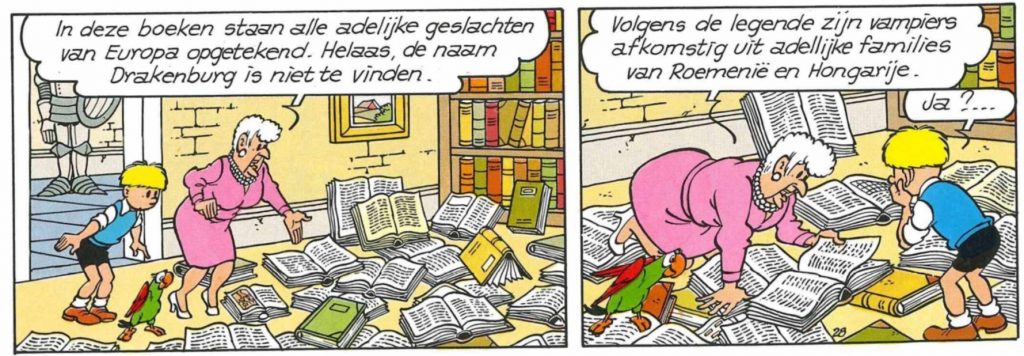
Кибик °1 — Jommeke in Romania

Michel De Dobbeleer has a new blog post about Jommeke and Houdini in Romania, over at the Balkanknipsels blog. Questions about what makes a fitting decor for a comics for children, in changing political times, and mixing up various records and legends.

Strong Bonds

Click here to download book: ACME_6_Strong Bonds
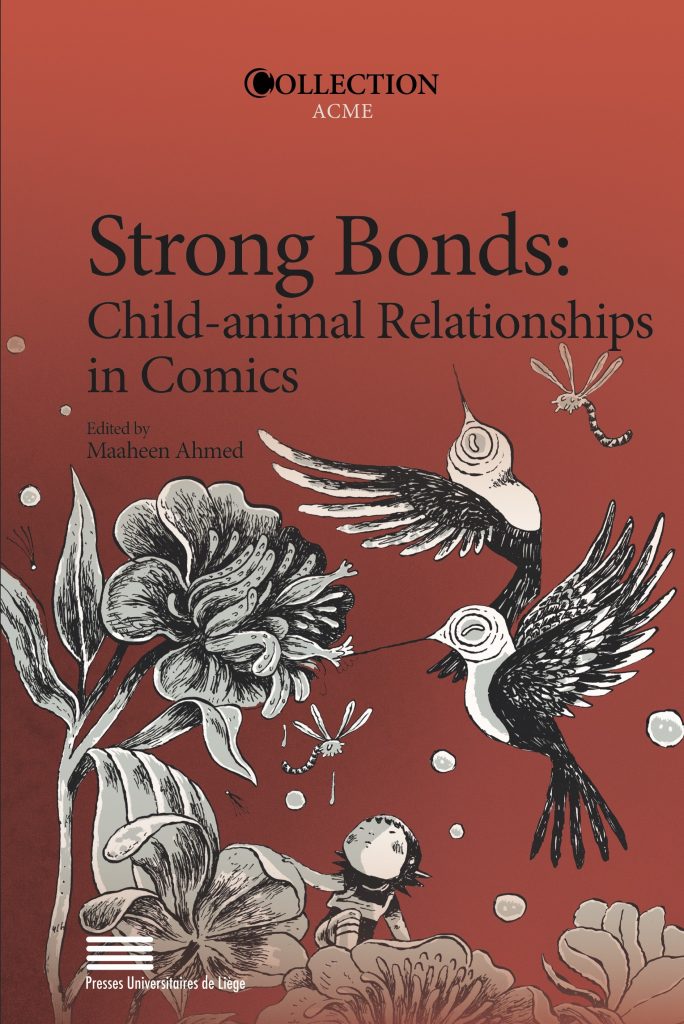
Snoopy and Charlie Brown, Calvin and Hobbes, Tintin and Snowy… comics are home to many memorable child and animal figures. Many cultural productions, especially children’s literature and cartoons, stress the similarities between children and animals, similarities that have their limits and often place the child, as human, above the animal. Still, these fictional situations offer opportunities for thinking of child-animal relationships in diverse ways through, for instance, considering the possibilities of privileged contact between children and animals or of animals that are more knowledgeable and powerful than children and even adults.
Despite the prevalence and success of child-animal tandems in comics and culture, we know very little about these relationships. What makes them so popular? How do they work? How much do they vary across time and cultures? What do they tell us about the place of animals and children in comics and in the real world?
Strong Bonds: Child-animal Relationships in Comics takes a first, important step in this direction. Bringing together scholars with a diverse range of comics expertise, the volume’s chapters combine contextualized readings of comics with relevant theories for interrogating childhood and animalhood, their overlaps and divergences. The strong bonds between children and animals mapped out here point towards alternative modes of conceptualizing family and identity and, ultimately, alternative means of reading, interpreting and imagining.
With chapters on early comics (the Italian children’s magazine Corriere dei Piccoli during WWI, Harold Gray’s Little Orphan Annie) international and regional classics (Tintin, the Flemish Jommeke) and contemporary graphic novels (Bryan Talbot’s A Tale of One Bad Rat, Brecht Even’s Panther), this critical anthology sheds light on a vast array of child-animal relationships in comics from Europe and North America.
Advertising and Children’s Comics

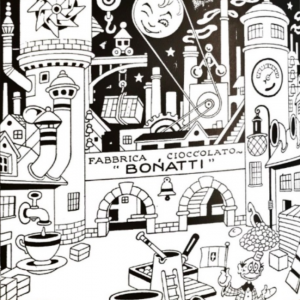
The latest issue of H-ermes features an article in Italian by Eva Van de Wiele, “Sedurre a tavola: confini mutati tra pubblicità e fumetti per bambini,” about the long history of comics and advertising relationships, as a brief archeology of the cartoonist-marketeer from the newspaper to the digital arenas of social media
“This article aims to investigate how advertising in Italy and in children’s comics has evolved. In postmodern times when goods have become messages (Klein, 2001), comics’ characters are progressively morphing into products. The intensification of the relationship between cultural and economic production (Jameson, 1998) led to different outcomes. On the part of the industry, similar appropriations – although they may seem either innovative or antiquated operations – testify to the persistent idea of a deep-rooted link between childhood and the medium itself (one of the childhood geographies studied by Ahmed 2020). These appropriations also show a relationship that has been established in comics since its origins: the bond between children and consumption in the comics published in Corriere dei Piccoli. This paper discusses the survival of paper comics for educational purposes as well as its strategies to retain the reader (International Kids). These are contrasted with pure entertainment comics which present various hybrid forms on social media such as Instagram and TikTok. Finally, the boundaries between the cartoonist- marketeer and international companies that create or deny the use of testimonials in advertising are also changing. The hybrid forms of comics activate the multimedia skills of the child consumer.”
Also of UGent note, Giorgio Busi Rizzi’s article, “Il fumetto digitale tra sperimentazione e partecipazione: il caso Homestuck,” about the tension between two inclinations (experimental and participated) of digital comics:
“Digital comics that try to maximize the affordances of their medium seem to be condemned to in-betweenness: their strength (leveraging on unusual narrative potentials) often becomes their limit, and authors are hardly able to free themselves from the role of niche experimenters and open up to audience participation. A significant exception, however, is Homestuck, a gigantic webcomic by Andrew Hussie. Strongly connected to videogame culture and the very nature of the internet, Homestuck features animations, sounds, embedded flash games, and so on. The webcomic resulted in various transmedial branches (a videogame spin-off and several friendsims, a multi-volume soundtrack, a book epilogue) and an ongoing intermedial adaptation in book format. It has equally managed, over the years, to consolidate an extremely lively community active both in its interactions with the author (with a constant exchange of ideas and an endless readiness to subsidize his projects), in its interpretation of the canon production, and in providing an amazing extent of fan production.
This contribution aims to analyze Homestuck as a possible mediation between the two inclinations (experimental and participated) of digital comics.”